Work coordination platform
Designed for the automotive industry
As a leader in innovation, you understand the importance of staying ahead of the curve in the fast-moving automotive 4.0 world. KanBo provides you with the tools to do just that by facilitating smart factory operations, streamlining project management, fostering collaboration and solving complex problems.
Revolutionizing Business Strategies with Advanced Document Management Tactics: Insights from a Document Management and Business Strategist Manager
Introduction:
As businesses grow in size, complexity, and geographic scope, it becomes increasingly challenging to coordinate and manage different teams, multiple projects, and diverse stakeholders. This is where KanBo comes into play. KanBo is a work coordination platform designed to streamline project management, foster collaboration, and promote knowledge sharing across large enterprises. In this article, we will explore the key features and benefits of KanBo for businesses, with a particular focus on document management in the automotive industry.
Key Features and Benefits:
KanBo offers a range of features and benefits that help large enterprises work more efficiently, creatively, and collaboratively. First and foremost, KanBo enables users to visualize and manage their workflows, tasks, and projects in a highly intuitive and customizable manner. This is made possible by the platform’s Kanban boards, which allow teams to organize their work into cards, columns, and swimlanes, and to track progress in real-time. With KanBo, users can easily create, move, and prioritize tasks, assign them to team members, set due dates and reminders, and communicate updates in a centralized location.
Another key feature of KanBo is its document management capabilities. This is particularly crucial for large enterprises in highly regulated industries, such as automotive, where data privacy, security, and compliance are top priorities. KanBo provides users with a robust and secure document repository that enables them to store, share, and collaborate on files of all types and sizes. Users can create folders, set access permissions, version control, and track changes in a seamless and integrated manner. The platform’s search and filter functions make it easy to find and retrieve documents when needed, and its integration with Microsoft Office and other productivity tools ensures seamless and efficient editing and sharing of files.
KanBo also offers a host of collaboration and communication features that help teams work more effectively across locations, time zones, and devices. The platform’s chat, comments, and mentions functions enable users to share ideas, feedback, and updates in real-time, without the need for email or meetings. Its video conferencing, screen sharing, and whiteboarding capabilities further enhance the collaboration experience and allow teams to work as if they were in the same room.
Short Product Tour:
To get a better sense of how KanBo works in practice, let’s take a quick product tour. When you first log in to the platform, you are greeted with a customizable dashboard that shows your most important tasks, notifications, and recent activity. From here, you can navigate to your Kanban boards, where you can create, customize, and manage your workflows and tasks. You can add columns and swimlanes, customize card views, set due dates and reminders, and assign tasks to team members. You can also use the platform’s built-in templates and automation workflows to quickly create new boards and streamline your processes.
In addition to its Kanban boards, KanBo offers a range of other features and integrations, such as calendars, Gantt charts, project portfolio management, and business intelligence analytics. These features allow users to gain deeper insights into their projects and teams, to optimize their processes and resources, and to make data-driven decisions.
Focus on Document Management in Automotive:
For large enterprises in highly regulated industries such as automotive, document management is a key challenge due to the need to comply with various regulations and standards. KanBo addresses this challenge by providing a secure and central document repository that enables users to store, share, and collaborate on documents of all types and sizes. This is particularly relevant in the automotive industry, where product safety, quality, and traceability depend on the effective management of a wide range of documents, such as engineering drawings, specifications, test reports, and supplier agreements.
To ensure the efficient management of documents in KanBo, users can set up different folders and access permissions, version control, and audit trails. They can also use tags, filters, and search functions to quickly find and retrieve the documents they need. In addition, KanBo integrates with leading document management systems such as SharePoint, ensuring seamless and secure synchronization of files across different platforms.
Conclusion:
In conclusion, KanBo is a work coordination platform designed for large enterprises that need to manage complex workflows, tasks, and projects. With its customizable Kanban boards, powerful document management capabilities, and collaboration and communication features, KanBo enables teams to work more efficiently, creatively, and collaboratively, regardless of their location, device, or time zone. The platform’s focus on document management is particularly relevant for highly regulated industries such as automotive, where compliance with regulations and standards is a top priority. By using KanBo, businesses can streamline their document management processes, improve their productivity, and achieve their strategic goals.
As a Business Strategy Manager in the Automotive Industry, managing daily operations and workflows is a crucial aspect of the job. With KanBo, the task becomes streamlined and organized. Here’s a week in the life of a Business Strategist Manager in Automotive industry with KanBo.
Monday:
Start the week by logging in to KanBo platform. Check the activity stream to quickly glance at all the updates and notifications. Review the status of ongoing projects by going through the respective KanBo cards. Use Kanban view to track all the sub-tasks and activities.
Tuesday:
Schedule a few cards for the weekly team meeting. Assign cards to relevant team members and set due dates. Use the checklist option to ensure that everyone is on the same page. Take a quick look at the resource management section to prevent possible resource overlaps.
Wednesday:
Collaborate with other team members on a few complex projects. Create card templates when you are working on similar type of projects with different clients. Use the document library feature to attach relevant documents and files to the cards.
Thursday:
Looking at multiple projects, prioritize tasks based on their respective deadlines. With the help of the Gantt chart, visualize the interdependencies among tasks and projects. Share the Gantt chart with team members to keep them informed on task dependencies.
Friday:
Send out a few emails throughout the day to team members via KanBo to remind them of their assigned tasks. Check up on the progress of each team member’s tasks. Use the reports feature to generate a weekly status report based on the card activities. Conclude the week with a feeling of accomplishment, knowing that everything is under control.
In conclusion, with the help of KanBo, keeping track of ongoing projects, prioritizing tasks, collaboration with team members, and generating reports is a hassle-free and efficient process. As a Business Strategist Manager in Automotive industry, the platform provides seamless coordination, measuring progress and managing resources, which allows you to focus on delivering a great client experience.
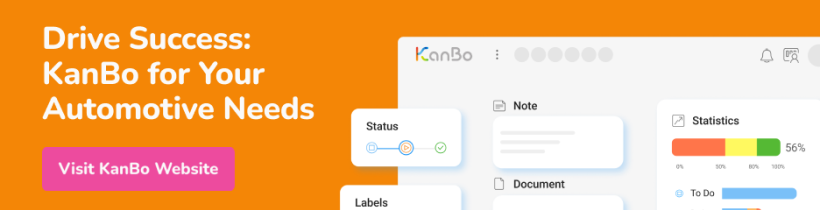
Did you know that KanBo is much more than just a tool for document management? While its robust document management capabilities are certainly a valuable feature, KanBo offers a wide range of other powerful features and functionalities designed to help large enterprises increase productivity and drive better business outcomes.
One key feature is KanBo Workspaces, which serve as a central hub for all team collaboration and communication. With Workspaces, team members can easily access information, track progress, and communicate with each other in real-time, all in one place.
Another powerful feature is KanBo Cards, which allow users to create and organize tasks, assign them to team members, and set due dates and priorities. With Card Templates and Card Groupings, users can easily standardize and automate workflows, increasing efficiency and reducing the risk of errors.
KanBo also offers a range of visual aids to help teams better understand their tasks and priorities. From Kanban Views and Calendar Views to Gantt Charts and Mind Map Views, users can choose the best way to visualize their work and track progress.
Finally, KanBo includes powerful reporting and analytics tools that allow team leaders to track key performance indicators and make data-driven decisions. With insights into workload, progress, and project outcomes, leaders can better allocate resources and adjust strategies to achieve their goals.
In short, KanBo is much more than just a document management tool – it is a comprehensive platform designed to help large enterprises achieve their full potential. Try it out today and see how it can benefit your team.
Q&A
1. What are the key features of KanBo that make it a useful platform for large enterprises?
– Kanban boards for visualizing and managing workflows, tasks, and projects
– Robust and secure document management capabilities
– Collaboration and communication features
– Integration with leading productivity tools and document management systems
2. Why is document management particularly important in highly regulated industries such as automotive?
– Compliance with regulations and standards is a top priority
– Effective management of a wide range of documents, such as engineering drawings, specifications, test reports, and supplier agreements, is crucial for product safety, quality, and traceability
– Central document repository with access permissions, version control, and audit trails is necessary for efficient document management
3. How can KanBo help businesses improve their productivity?
– Streamline and optimize workflows, tasks, and projects with customizable Kanban boards and automation workflows
– Collaborate and communicate more effectively with team members across locations, time zones, and devices
– Gain deeper insights into projects and teams with business intelligence analytics
– Ensure compliance with regulations and standards through secure document management capabilities.
Use Case: Implementing KanBo for Automotive Document Management
As a large automotive company, managing a wide range of complex and highly sensitive documents is paramount to success. With regulatory compliance and security being a top priority, implementing KanBo can streamline document management and increase productivity and efficiency within the industry.
One potential use case is using KanBo to support project leaders in planning and developing service as a package that includes solution services and data business for autonomous work. This may involve collaborating with legacy mower business and maximizing synergy and leveraging existing infrastructure.
With KanBo’s document management capabilities, team members can easily create folders and set access permissions, version control, and track changes in a seamless and integrated manner. Document collaboration can be achieved by creating new folders and uploading documents from the users’ hard drives, and users can also customize KanBo boards to include document management features, such as creating specific columns for document tracking.
In addition to document management, KanBo offers a range of other features, such as Kanban boards, calendars, Gantt charts, project portfolio management, and business intelligence analytics. These features allow users to gain deeper insights into their projects and teams, optimize their processes and resources, and make data-driven decisions.
Furthermore, KanBo can also help lead sales and marketing efforts for new solution services, including acquiring new potential customers, developing customer relations, and managing customer accounts.
Finally, KanBo’s integration with Microsoft Office ensures seamless and efficient editing and sharing of files, meaning users can utilize their existing skills to work even more efficiently.
Overall, implementing KanBo can help achieve a holistic and effective approach to document management, collaboration, and project management in the automotive industry, leading to increased productivity and efficiency.