Work coordination platform
Designed for the automotive industry
As a leader in innovation, you understand the importance of staying ahead of the curve in the fast-moving automotive 4.0 world. KanBo provides you with the tools to do just that by facilitating smart factory operations, streamlining project management, fostering collaboration and solving complex problems.
Revolutionizing Project Management with Document Management: A Guide for Engineer II – Frame Materials Engineer
KanBo: The Work Coordination Platform for Large Enterprises
As the world becomes more digitally connected, large enterprises face an increasing need for a work coordination platform that can make collaboration and project management efficient. That’s where KanBo comes in, offering a comprehensive set of features that enable users to organize, track, and complete tasks with ease.
Designed with large enterprises in mind, KanBo provides a range of benefits that make it the ultimate solution for managing complex projects and teams. Specifically, it offers a powerful document management feature that makes sharing and editing files a breeze. This means that all stakeholders can easily access important documents related to the project, making information sharing seamless.
KanBo also offers a range of other features that make it a work coordination platform of choice for large enterprises. For example, it has a robust task management system that enables users to create, assign, and prioritize tasks with ease. Additionally, it has a flexible notification system that keeps everyone updated on the status of the project, ensuring that everyone is on the same page.
Furthermore, KanBo’s focus on collaboration means that it integrates with a range of external tools and platforms, making it easy to incorporate existing workflows and processes. With its user-friendly interface and powerful search functionality, it’s easy to find and retrieve key information, making project management a seamless experience.
For Engineer II – Frame Materials Engineer in the Automotive industry, KanBo provides a unique solution to the challenges of managing complex projects. The platform’s document management system allows you to easily manage and share information related to material technology sensing, new supplier qualification, parts failure analysis/testing, patent creation/submission, and other key activities.
With KanBo, you can easily collaborate with your team, both within and outside your organization, streamlining project management and fostering collaboration. As a Career Level 3, Materials Engineer II, KanBo provides you with the tools to develop new material technologies that will enable your company to achieve its major goal of “serving people worldwide with the ‘joy of expanding their life’s potential.'”
In summary, KanBo is a work coordination platform that’s designed to meet the needs of large enterprises. With its powerful features and focus on collaboration, it’s the ultimate solution for managing complex projects and teams, from design and development to manufacturing and beyond. Make KanBo part of your digital transformation journey today.
As a Frame Materials Engineer in the Automotive industry, managing documents is crucial to my daily workflow. Fortunately, with KanBo and its Document Management capabilities, I am able to seamlessly store, organize, and share files with my team. Here is a week in my life as an Engineer II utilizing KanBo Document Management:
Monday:
I start the day by logging into KanBo and checking for any new cards or updates on existing ones. I see that a colleague has added a Card requesting my input on the new material we are testing for the frames. I open the card, review the attached documents and add my comments to the Card Elements. I then attach a relevant research paper from my Document Library and mention my team lead in a comment with a link to the paper.
Tuesday:
Today, I have a project kickoff meeting with stakeholders from different departments. I create a new card and add all the necessary details about the project including the timeline, milestones, and responsibilities. I attach the project charter document from my Document Library and invite the key team members to join the card for better collaboration.
Wednesday:
One of my colleagues needs to see the technical specifications of a material we are using. I quickly search for the Document Library and find the file they need. Instead of emailing it, I share a link to the card where the document is attached. They can easily access it and leave comments for me to review.
Thursday:
I receive an urgent email from a supplier with a Material Safety Data Sheet (MSDS) for a new material we just received. I download the MSDS and immediately attach it to the related Card in KanBo. I assign the relevant board members to review and provide their feedback.
Friday:
As the week comes to a close, I review my Document Libraries and ensure that all files are up to date and organized properly. I also take some time to explore some of KanBo’s other features such as the Gantt Chart for project tracking and Timeline View for visualizing the progress of different tasks.
Overall, with the help of KanBo Document Management, I am able to efficiently manage and collaborate on documents, saving me time and helping me work more effectively as a Frame Materials Engineer in the Automotive industry.
Did you know that KanBo is much more than just a tool for document management? While KanBo does offer powerful document management capabilities, it is also designed to be a comprehensive work coordination platform for large enterprises.
KanBo Workspaces allow for the creation of dedicated areas for teams, departments, and external stakeholders to collaborate. This simplifies work management by keeping all activities, documents, and information in one place. Moreover, KanBo Spaces enable the management of multiple projects, initiatives, and processes, all under one roof.
KanBo Cards serve as the cornerstone of KanBo’s unique work management methodology, which focuses on simplifying work coordination to allow people to focus on things that only people can do. Cards can be used to assign tasks, schedule activities, post notes, and checklists, and other useful information. They also offer real-time collaboration and can be used to communicate statuses, blockers, and progress updates.
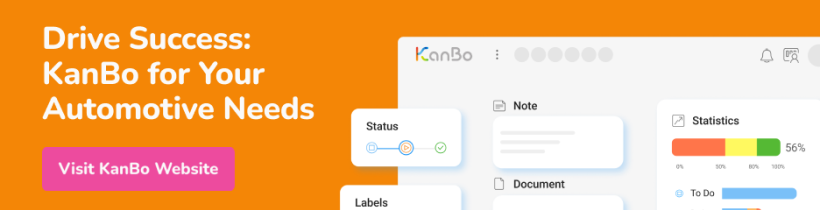
KanBo also offers visualization tools such as Kanban, Gantt, Calendar, Table, and Activity views that allow teams to view their work in the most suitable format. This supports different work styles and hybrid methodologies across your organization to foster responsibility, autonomy, and mastery.
In summary, KanBo is not just about document management; it is a powerful work coordination platform with a unique methodology designed to help you manage your work, simplify communication, and foster trust and transparency within your organization.
Q&A
1. Question: Is KanBo suitable for small businesses and startups?
Answer: While KanBo offers powerful features that make it a great solution for managing complex projects and teams, it’s primarily designed for large enterprises. However, small businesses and startups can benefit from its robust task management and collaboration tools, which can help teams stay organized and productive.
2. Question: Does KanBo have any integrations with third-party tools?
Answer: Yes, KanBo has an API that allows it to integrate with a range of external tools and platforms, making it easy to incorporate existing workflows and processes. It also has out-of-the-box integrations with Microsoft Teams, Outlook, and SharePoint, among others.
3. Question: How does KanBo ensure the security of sensitive documents?
Answer: KanBo has several security features that ensure the protection of sensitive documents, such as customizable role-based access control, encryption in transit and at rest, and two-factor authentication. Moreover, the platform is compliant with regulatory standards such as GDPR, ISO 27001, and SOC 2.
Use Case: Managing Material Technology Sensing for the Automotive Industry
Let’s say you are a Materials Engineer for a leading automotive company, and your role involves conducting research for new material technologies for use in the company’s vehicles. You need to manage a large amount of information related to your research, including supplier qualification data, test results, and material specifications. With KanBo, you can simplify project management and coordination, make document management a breeze, and collaborate with your team to ultimately bring new material technologies to life.
Here’s how you can use KanBo to manage your work:
Step 1: Create a KanBo Board
Start by creating a KanBo board for your material technology sensing project in KanBo. Within the board, you can create a dedicated workspace for your team to collaborate, create cards for tasks related to your research, and organize your project as required.
Step 2: Use Document Sources to Manage Your Files
As a material engineer, you need to manage multiple documents, including material testing results, supplier specifications, and design plans. A KanBo feature called Documents Sources helps you to manage and access these documents easily. You can link multiple SharePoint document libraries to your KanBo board, meaning you can access all pertinent information relating to your research project from one central location. By using KanBo’s integration with Microsoft Office tools, you can edit, create, and share documents seamlessly.
Step 3: Collaborate with Your Team
As companies grow, collaboration inevitably becomes more complex, and it’s easy to get bogged down in endless email chains and meetings. With KanBo, you can keep all stakeholders on the same page by creating a dedicated workspace for your team. By tying tasks, documents, and communication into one workspace, your team can save time and streamline communication.
Step 4: Use Cards to Assign Tasks and Monitor Progress
To manage your material technology sensing project effectively, you will need to create and assign tasks, monitor progress, and stay on top of deadlines. KanBo’s built-in task management tool allows you to do this quickly and easily. You can create, assign, and track tasks with a few clicks, improving visibility and transparency. You can also use KanBo’s collaboration features to discuss and update tasks with other team members, keeping everyone informed.
Step 5: View Your Progress with Visualization Tools
KanBo’s visualization tools, such as Kanban, Gantt, Calendar, Table, and Activity views, allow teams to view their work in the most suitable format. By using these tools to monitor progress, you can identify areas where your project needs additional support, anticipate bottlenecks, and make adjustments promptly.
In conclusion, KanBo is an ideal work coordination platform for large enterprises like automotive companies that require efficient collaboration, project management, and document management. By using KanBo’s intuitive interface, you can streamline your project management workflows, manage critical documents, and collaborate with your team to bring new material technologies to market. With KanBo, you can use your existing Microsoft Office skills to manage your entire project from one central location, saving yourself time and resources.