Work coordination platform
Designed for the automotive industry
As a leader in innovation, you understand the importance of staying ahead of the curve in the fast-moving automotive 4.0 world. KanBo provides you with the tools to do just that by facilitating smart factory operations, streamlining project management, fostering collaboration and solving complex problems.
Streamlining Operations: The Power of Document Management and ERP for Sales Accounting Managers
Introduction:
In today’s business world, large enterprises face a plethora of challenges and hurdles while trying to streamline their operations. This is where KanBo, a work coordination platform, comes into play. KanBo offers a robust solution for large enterprises, which brings all teams, departments, and external stakeholders together. Today, we will discuss in detail how KanBo, with its unique features and benefits, caters to the needs of large enterprises.
Feature benefits:
KanBo offers several benefits to large enterprises. Firstly, its on-premises and cloud installations and licenses cater to the specific needs and preferences of every type of business. Secondly, its intuitive design and user-friendly interface enable smooth collaboration among teams. Moreover, KanBo’s real-time dashboards allow Managers to monitor performance and progress effortlessly. Additionally, with automation tools, KanBo eliminates the need for repetitive and manual tasks, freeing up time for more complex tasks.
Short product tour:
One of the most unique features of KanBo is its Document Management. It lets users access, collaborate, and edit documents in real-time. With KanBo’s Document Management, teams can create, edit, and store files in a shared workspace. Moreover, it also allows for easy search and grouping of files, enabling quick retrieval. Users can drag and drop files or attach them from the cloud, and all changes made to them are automatically synced, ensuring no data loss.
Focus on Document Management in Automotive:
In the Automotive industry, document processing and management are critical. KanBo’s Document Management feature can cater to these specific needs. From vehicle design specifications to supply chain documentation, KanBo ensures that all data is organized, accessible, and secure. Moreover, with KanBo’s customizable dashboards, Managers can get real-time insights into production schedules and supplier performance.
Conclusion:
In conclusion, KanBo is an excellent solution for large enterprises, especially in the Automotive industry, where effective document management is a prerequisite. KanBo’s on-premises and cloud installations, automation tools, and intuitive design offer a robust solution that enables smooth collaboration and better performance tracking. With its Document Management feature, KanBo ensures that all data is organized, accessible, and secure, enabling enterprises to streamline their operations effectively.
As an ERP Sales Accounting Manager in the Automotive industry, your daily tasks involve managing sales transactions and financial data. In this fast-paced environment, having a robust and efficient document management system is crucial to keep track of all relevant information. KanBo, with its latest Document Management features, provides you a perfect solution to streamline these processes. Let’s take a look at how KanBo and Document Management can help you in a typical week in the life of an ERP Sales Accounting Manager in the Automotive industry.
Monday: Start your week by creating a new board on KanBo. You can use the built-in templates to get started quickly. Create a board for your team to manage sales transactions, and use Document Sources to link relevant document libraries. Assign tasks to your team using KanBo Cards and track progress using the Kanban View. By the end of the day, you should have a clear overview of all ongoing sales transactions and their status.
Tuesday: Today is the day to prepare financial reports. Use KanBo’s advanced Document Management features to access all relevant financial documents. You can quickly retrieve any document attached to a Card and use it to generate financial statements. Once you have completed the reports, attach them to relevant Cards and assign them to relevant team members for review.
Wednesday: As an ERP Sales Accounting Manager, you need to keep an eye on financial expenditure. Use KanBo’s Resource Management feature to track all financial transactions and monitor your budget. You can use advanced filters in the Table (Spreadsheet) View to analyze your expenses better. With KanBo, you can easily spot any financial irregularities and take action.
Thursday: Today, you have a meeting with the Sales and Marketing team to discuss upcoming sales targets. Use KanBo’s Mind Map View to brainstorm ideas and visualize the sales plan. The Mind Map View enables you to create a graphical representation of your plan, making it easy to communicate with your team. You can also attach relevant documents to each part of the Mind Map.
Friday: It’s the end of the week, and it’s time to analyze your team’s progress. Use KanBo’s Dashboards & Reports feature to generate custom reports. You can use the Gantt Chart View to see a visual representation of your team’s progress and performance. Use the reports to identify areas where your team needs further support.
In conclusion, KanBo’s Document Management features are invaluable for any ERP Sales Accounting Manager in the Automotive industry. With KanBo, you can streamline your processes, improve collaboration, and have a clear overview of your team’s progress. Give it a try and see how it can help you manage your daily tasks efficiently.
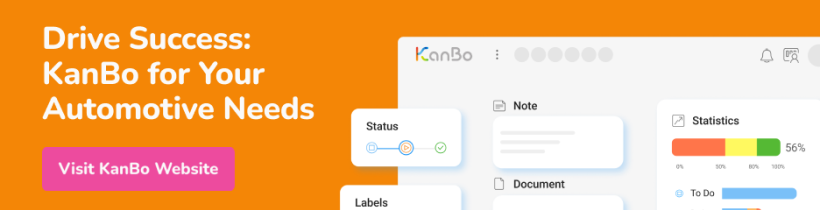
Did you know that KanBo is much more than just a tool for document management? While it excels in document management, KanBo has a broad range of features that make it a powerful work coordination platform. With KanBo, every person in your team knows what needs to be done and why, leading to clarity and transparency. KanBo supports different work styles and hybrid methodologies across your organization to foster responsibility, autonomy, and mastery.
KanBo’s customizable and intuitive boards allow you to visualize work in Kanban, list, table, calendar, or timeline view, depending on your preference. This flexibility makes it easy to organize tasks and manage projects, no matter how complex they are. You can also create card templates that are tailored to your team’s specific needs, making it easier to create new cards and ensure that everyone is working from the same playbook.
KanBo is also packed with collaboration features like activity streams and @mentions that help you keep track of what everyone is working on. You can comment on cards, follow them for updates, and receive notifications about any changes that have been made. These features help teams stay in sync and make it easy to collaborate, even when working remotely.
If you need to manage resources, KanBo has you covered there too. You can assign people to cards and schedule them, making it easy to see who is working on what and when. Resource management ensures that you make the best use of your team’s skills and time, so you can maximize productivity and achieve your goals faster.
Overall, KanBo is much more than a document management tool. It’s a powerful work coordination platform that helps teams of all sizes and types work together better. Whether you need to manage documents, tasks, projects, or resources, KanBo has everything you need to stay organized and on track.
Q&A
Q1. What specific benefits does KanBo offer to large enterprises?
A1: KanBo offers several benefits to large enterprises, such as on-premises and cloud installations, intuitive design and user-friendly interface, real-time dashboards, and automation tools that eliminate manual tasks, freeing up time for more complex tasks.
Q2. How does KanBo’s Document Management feature cater to the specific needs of the Automotive industry?
A2: KanBo’s Document Management feature allows for effective management of document processing in the Automotive industry, from vehicle design specifications to supply chain documentation. The feature enables users to organize, access, and secure data, thereby streamlining operations and improving performance tracking.
Q3. What are some of the ways in which an ERP Sales Accounting Manager in the Automotive industry can use KanBo’s Document Management feature?
A3: An ERP Sales Accounting Manager in the Automotive industry can use KanBo’s Document Management feature to create boards for managing sales transactions, prepare financial reports, track financial expenditure using Resource Management, brainstorm sales plans using the Mind Map View, and generate custom reports using Dashboards & Reports.
Use Case – Streamlining Document Management in the Automotive Industry with KanBo
Let’s consider an automotive industry scenario where a large enterprise needs to redesign its future-oriented business methods, standards, and processes within the SAP template. The focus is on sales accounting (SA) and business partnership (BP) to ensure process harmonization. In addition, the enterprise needs to synchronize its debts and credits with other upstream systems and develop a plant-specific clarification of requests from central project teams. With these objectives in mind, the enterprise faces several challenges that require immediate attention. Some of these include:
1. Difficulty in managing the massive volume of documents, including vehicle design specifications, supply chain documentation, billing, and Miscellaneous Billing accounts.
2. Lack of a centralized workspace for collaboration and smooth communication among team members.
3. Time-consuming manual tasks, including data entry and repetitive tasks.
KanBo can help overcome these challenges with its powerful Document Management features. KanBo allows teams to create, edit, and store files in a shared workspace, enabling easy access and collaboration. For instance, teams can create a board for SA and BP processes, allowing stakeholders to access and collaborate on documents from anywhere, at any time.
With KanBo’s Document Sources feature, users can attach multiple SharePoint Document Libraries to one board, including those created during board creation. Moreover, users can register the already existing Document Library and attach them to a specific board. This way, the enterprise can use its existing documents from different libraries and assign them to cards, thereby simplifying document management. Users can drag and drop files or attach them from the cloud, and all changes made to them are automatically synced, ensuring no data loss.
KanBo ensures smooth communication and collaboration among team members through its activity streams and @mentions features. Users can comment on cards, follow them for updates, and receive notifications about any changes made. Additionally, KanBo offers customizable dashboards that allow Managers to monitor performance and progress effortlessly. With KanBo’s automation capabilities, teams can eliminate repetitive and manual tasks, freeing up time for more complex tasks.
Moreover, KanBo supports different work styles and hybrid methodologies across the enterprise, fostering responsibility, autonomy, and mastery. KanBo enables Managers to lead cross-functional projects with a variety of different interfaces or work packages while defining standards for processes/systems. KanBo ensures effective resource management by enabling assigning people to cards, scheduling them and allocating tasks to available resources.
Conclusion
KanBo with its powerful work coordination platform streamlines document management for large enterprises. In the automotive industry, where effective document management is a prerequisite, KanBo’s document management feature ensures that data is organized, accessible, and secure. With KanBo’s powerful document sources feature, users can use their existing documents from different libraries and simplify document management. KanBo’s intuitive design, user-friendly interface, and automation capabilities offer a robust solution that enables smooth collaboration and better performance tracking.